
Gatorbreeze
Moderator
- Nov 14, 2018
- 1,369
- 244
- 63
The whole family is way out in left field Pastor Bob.
Follow along with the video below to see how to install our site as a web app on your home screen.
Note: This feature may not be available in some browsers.


 www.gbnews.com
/https://tf-cmsv2-smithsonianmag-media.s3.amazonaws.com/filer_public/a5/e3/a5e396d7-1481-4f80-a0c3-00600e025e4e/bracelet.jpg)
 www.smithsonianmag.com

 www.nytimes.com
The vanishing of Oscar Pistorius
Simon Hughes
Sept. 26, 2025
The mansion that Oscar Pistorius calls home in Pretoria is named after a breed of African eagle that swoops down on the savannahs and wetlands of the Kruger National Park, preying on lizards and snakes.
Bateleur, in the affluent suburb of Waterkloof, belongs to Pistorius’ uncle, Arnold. The most famous and notorious athlete in Paralympic history will live there until at least 2029, under the conditions of his parole following his release from the Atteridgeville Correctional Centre in January 2024.
He had served just over nine years in jail for killing his 29-year-old girlfriend, Reeva Steenkamp, by shooting her four times through a locked toilet door at his villa to the east of Pretoria in the early hours of Valentine’s Day 2013.
The murder of Steenkamp, a law graduate, model and television presenter, was a national tragedy. The face of an anti-bullying campaign, she promoted gender equality and spoke regularly about abuse against women. In court, a cousin, Kim Martin, described the impact of Steenkamp’s death on the family as being “like the end of the world”.
Reeva Steenkamp with Oscar Pistorius in 2013 (Waldo Swiegers/AFP via Getty Images)
But her killer’s status as a sporting icon — the disabled runner who not only conquered the world of Para Athletics, winning six Paralympic gold medals, but also became the first double amputee to compete at the Olympics — turned his trial and subsequent imprisonment into global news.
Yet, for all the frenzy of the coverage surrounding his conviction, little has been said or written about Pistorius since his release in 2024.
There have been sightings at a church, talk of a new girlfriend — who bears a striking resemblance to Steenkamp — as well as a photograph in June 2025 of him appearing at an Ironman triathlon in Durban, an event that required consent from the parole authorities due to restrictions placed on his movement.
Pistorius will be 39 in November. Before the murder, his fame transcended sport: he was the “Blade Runner”, one of the most identifiable sportspeople on the planet, having had both legs amputated below the knee aged 11 months after being born without the outsides of his feet and his fibulas.
It is not inconceivable that he could have been preparing for the World Para Athletics Championships starting in New Delhi this month. Instead, Pistorius lost his sponsors after being charged, including Nike and Ossur, the Icelandic firm that manufactured the carbon fibre prosthetic blades he used for his races.
Oscar Pistorius was one of the most famous athletes on the planet (Ian Kington/AFP/Getty Images)
Sport, too, distanced itself from its former poster boy. In a statement issued after he was convicted, the International Paralympic Committee urged “the importance of differentiating between Oscar’s contribution to the Paralympic movement and his private life”, but the damage to his legacy was irreparable.
Now, he is virtually invisible in his own town, living a reclusive existence behind the high walls of his temporary home. And though he remains the subject of intense curiosity, finding answers about his new life is far from straightforward.
Bateleur perches on a ridge overlooking Waterkloof, a heavily protected enclave defined by South Africa’s old money and the presence of foreign ambassadors.
Waterkloof feels Mediterranean due to its bountiful bougainvillaea and sun-bleached walls. Yet Bateleur, which took around a decade to construct, has none of that warmth.
Instead, it is a stark compound, with brooding ramparts, a waterless moat and a sentry box that is stationed at all times of the day by at least one security officer dressed in a black suit and tie. Whenever he stands up and places his hands on his hips, pushing back the quarters of his jacket to reveal a holster and pistol, it feels like a warning.
The compound belonging to Arnold Pistorius, where Oscar is living (Simon Hughes/The Athletic)
It is an appropriately guarded setting for Pistorius, whose parole conditions mean that every public appearance comes with risk. He knows, for example, that if he speaks to the media, he will be sent back to jail.
It means that, to build a picture of Pistorius’ post-prison life, you must speak to his fellow inhabitants of Waterkloof, although that, too, is no easy task. Everyone approached by The Athletic requested not to be identified, and most did not want to be directly quoted. As one older man put it while he tended to flowers beside a neatly presented front lawn, “Waterkloof likes gossip but nobody likes to be accused of talking”.
There are enough snippets, however, to build an impression of Pistorius’ world. It got around Waterkloof more than a decade ago, when Pistorius was awaiting his first trial, that he was living in a cottage separated from Bateleur by a swimming pool designed in the shape of a crucifix.
It is a symbol of Arnold’s faith. One Waterkloof resident suggests he has tried to bring balance back to his nephew’s life through religion.
The pair’s bond is close. Arnold, along with his wife, Lois, raised Pistorius from the age of 15 when his mother, Sheila, died after suffering an adverse reaction to some wrongly prescribed medication.
Arnold was among the first members of Pistorius’ family to arrive at his villa at the Silverwoods country estate on the night of Steenkamp’s killing. After he was taken into custody, Arnold asked a Calvinist minister to visit him in his cell before the first bail hearing.
Arnold Pistorius with his wife Lois after Oscar’s conviction (Charlie Shoemaker/Getty Images)
Arnold has a formidable reputation in Waterkloof. He was already a well-known figure before his nephew became one of the most recognisable sportspeople on the planet, having remained in South Africa at the end of Apartheid when many wealthy white businessmen left the country.
Top OLYMPICS Stories
What's next for the Panthers in a three-peat bid without captain Aleksander Barkov? Bill Zito one-on-one
World Cup win can be England's 'Lionesses moment' - 'We've got the ball rolling and we don't want it to stop'
How ballet and hip-hop helped this American become a track and field great
Arnold also became the family’s de facto spokesman in the wake of Steenkamp’s death. Three days after the killing, he issued a strong statement to the Associated Press, rejecting claims that Pistorius was guilty of murder. While not denying that Pistorius had shot Steenkamp, Arnold said there was “no substance to the allegation” that it was premeditated and that the family was “battling to come to terms with Oscar being charged with murder”. He also insisted that Pistorius and Steenkamp “had plans together and Oscar was happier in his private life than he had been for a long time”.
Except, in court, lengthy text messages sent by Steenkamp in the final fortnight of her life to her boyfriend of three months revealed his possessiveness. Steenkamp told him that she felt controlled by his moods and was sometimes afraid of him. Some of his tantrums were in public, embarrassing her, and she also told Pistorius that she adjusted her own behaviour to fit how he was feeling to avoid further outbursts.
Meanwhile, Samantha Taylor, one of Pistorius’ former girlfriends, testified against him, saying that she feared he would kill her, detailing an incident where he fired a gun through the roof of a car after an argument with a police officer. She later hid his gun after he flew into a rage at her.
Pistorius would defend himself by claiming that he fired shots through a locked toilet door after waking suddenly in the early hours of the morning, believing an intruder was inside. Instead, it was Steenkamp.
Pistorius said he was not wearing his artificial legs when he discharged his 9mm pistol, with some of the trial’s most remarkable scenes coming when he showed jurors how he moved around on his leg stumps.
Pistorius walking in the courtroom without his prosthetic legs (Alon SkuyAFP via Getty Images)
But the prosecution argued it was inexplicable that Pistorius had not adequately checked whether his girlfriend was in bed beside him before seizing his gun from underneath it, or that Steenkamp would not have screamed after the first of four shots into different parts of her body, even if they were unloaded quickly.
Pistorius was initially found guilty of culpable homicide in September 2014 after a six-month trial, and sentenced to five years in prison, but that was upgraded to murder by an appeal court the following year. His sentence was extended to six years, and then 13 years and five months by the appeal court.
Pistorius’ father Henke — Arnold’s brother — has spoken of a “rift” developing between him and his son over the athlete’s apparent determination to accept his guilt. It helps explain why Oscar Pistorius was always likely to end up living with Arnold, who had said as long ago as March 2023 that he was preparing a room in his mansion for his nephew to live in.
Pistorius served his time at the Atteridgeville Correctional Centre in Pretoria, although the facility’s detachment from the outside world would not have felt altogether unfamiliar.
Many of the smaller dwellings in Waterkloof boast electric fencing and razor wire, and warning signs erected by the private security firms that patrol the streets. These are ever-present in South Africa’s rich neighbourhoods. In 2013, private security firms in the country employed more than 400,000 people, double the number of police officers. According to the state’s Private Security Industry Regulatory Authority, that figure had jumped to 2.7million by 2024, while the police force had shrunk by a quarter.
In 2022, Waterkloof started a monitored access initiative called SafeWaterkloof, which relies on residents making monthly payments of R750 (around £30), primarily for the maintenance of the checkpoints and barriers on the edge of the estate.
In 2024, the initiative claimed it had reduced crime by 80 per cent, although even its best-protected residents are not immune: in 2017, Lois Pistorius was robbed by an intruder wielding a hammer at her mansion, having been followed home after a shopping trip. Her bodyguard was held at gunpoint while the attack took place.
Waterkloof feels like a place that is constantly on high alert. Security cameras abound and while the roads are largely quiet, that is partly due to the risk of carjackings.
Safety is a major issue in Waterkloof (Simon Hughes/The Athletic)
Stop for too long on its streets, and someone will want to know what you are doing because it might look like you are scoping the place out.
Pistorius may be operating under severe restrictions in Waterkloof, needing to seek permission from his parole officer before leaving the area, but in many ways, his life is similar to any of the neighbours who limit their movement because of their safety concerns. The routine is one of work, shopping mall and home.
For some, it is easier to avoid hassle by bolting the door.
If you head north from the Pistorius compound, you’ll eventually pass through security controls and reach Main Street, which acts as an unofficial border with neighbouring Brooklyn, another wealthy suburb.
Turn right and there’s the gym where Pistorius used to work out with his trainer, Jannie Brooks. He told the New York Times Magazine in 2012 that their relationship started when he was studying at the nearby Pretoria Boys High School, where “excellence thrives in every aspect,” according to its website.
“He came around with his mates,” Brooks recalled in that article. “He was just one of the bunch of them. It was six months before I realised he didn’t have lower legs.”
The gym is set just off the street, over the road from a low-key strip mall. In the middle of the day, it is locked and separated from a scouts’ hall and tennis club next door by high railings and more razor wire.
One man, who says he has been a regular at the gym for years, remembers Pistorius before he was famous. He recalls his determination being “off the scale”; he felt Pistorius seemed desperate to prove something.
Pistorius was obsessive and if he had a hinterland, it didn’t really show. His conversation was all about physical preparation, wanting to know how he could become bigger, fitter and stronger.
Pistorius hasn’t been seen by the same man at the gym since what his family refer to as “the incident” in conversations with other Waterkloof residents. Instead, he uses the facilities back at his uncle’s house, a mile away. Though Pistorius was sighted at local Italian and Japanese restaurants when he was preparing for his first trial, his “public” appearances tend to revolve around private functions these days, unless it involves practising his faith.
In 2024, it was reported by the New York Post that he was attending services at a Dutch Reformed church where he was helping out with janitorial work. The church, NG Kerk on Dey Street, opened in 1984 and even this has the feel of a place of incarceration because of its huge gates locked outside of worshipping hours (aside from mass on a Sunday, there are bible study groups on Wednesdays and Thursdays). There are also the seemingly obligatory security signs that warn the curious that an armed response unit isn’t very far away.
NG Kerk in Waterkloof, a church Pistorius has attended (Simon Hughes/The Athletic)
Even the church senses it might be a target but this, ultimately, is South Africa, and despite a perception that Johannesburg, an hour’s drive south, is more violent, 2025 data provided by Statista, a website that assesses crime rates, rated Pretoria as the second-most dangerous city in the world based on crime rates, only marginally behind another South African city, Pietermaritzburg.
Inside the boundaries of Waterkloof, there is no indication that the mood is about to relax any time soon. Where Main Street turns into the estate via Silver Oak Avenue, there is a shell of a building that looks too harsh to be a villa. The talk locally is about a security firm buying the space, letting everyone know who is really in charge.
Closer to the Pistorius compound is the peeling Cricklewood Manor, a recently closed hotel where journalists stayed in those early days following Steenkamp’s death and the athlete was on bail, hiding away from the world, just around the corner.
Her father, Barry, died in September 2023, aged 80, having met his daughter’s killer a year earlier as part of a programme that gives victims of crime or their families the chance to confront offenders when they are being considered for parole.
Steenkamp later suggested he would have supported the application had Pistorius admitted he intentionally fired his gun in a rage following an argument but he stuck to his story. “I was wasting my time, he is a murderer; he should remain in jail,” Steenkamp told the Daily Mail in 2023. Except, the following year, Pistorius was out.
The Steenkamp family’s suffering did not end with Reeva’s death. Her British-born mother, June, has spoken of how the family’s agony was aggravated by the scrutiny that came their way after her daughter’s death. Having been nearly bankrupted by legal fees, they were forced to move home.
All they wanted was peace, although there seems little chance it will ever come. June collapsed at her farm near Port Elizabeth this month, having suffered a severe stroke, and is facing a difficult recovery.
When Pistorius was released in 2024, it fell to June to respond on behalf of the Steenkamp family. “Has there been justice for Reeva?” she asked. “Has Oscar served enough time? There can never be justice if your loved one is never coming back, and no amount of time served will bring Reeva back.
“We, who remain behind, are the ones serving a life sentence.”
(Photos in top design: Gianluigi Guercia/AFP; Charlie Shoemaker/Getty Images; Designed by: Eamonn Dalton/The Athletic)

 www.cbsnews.com
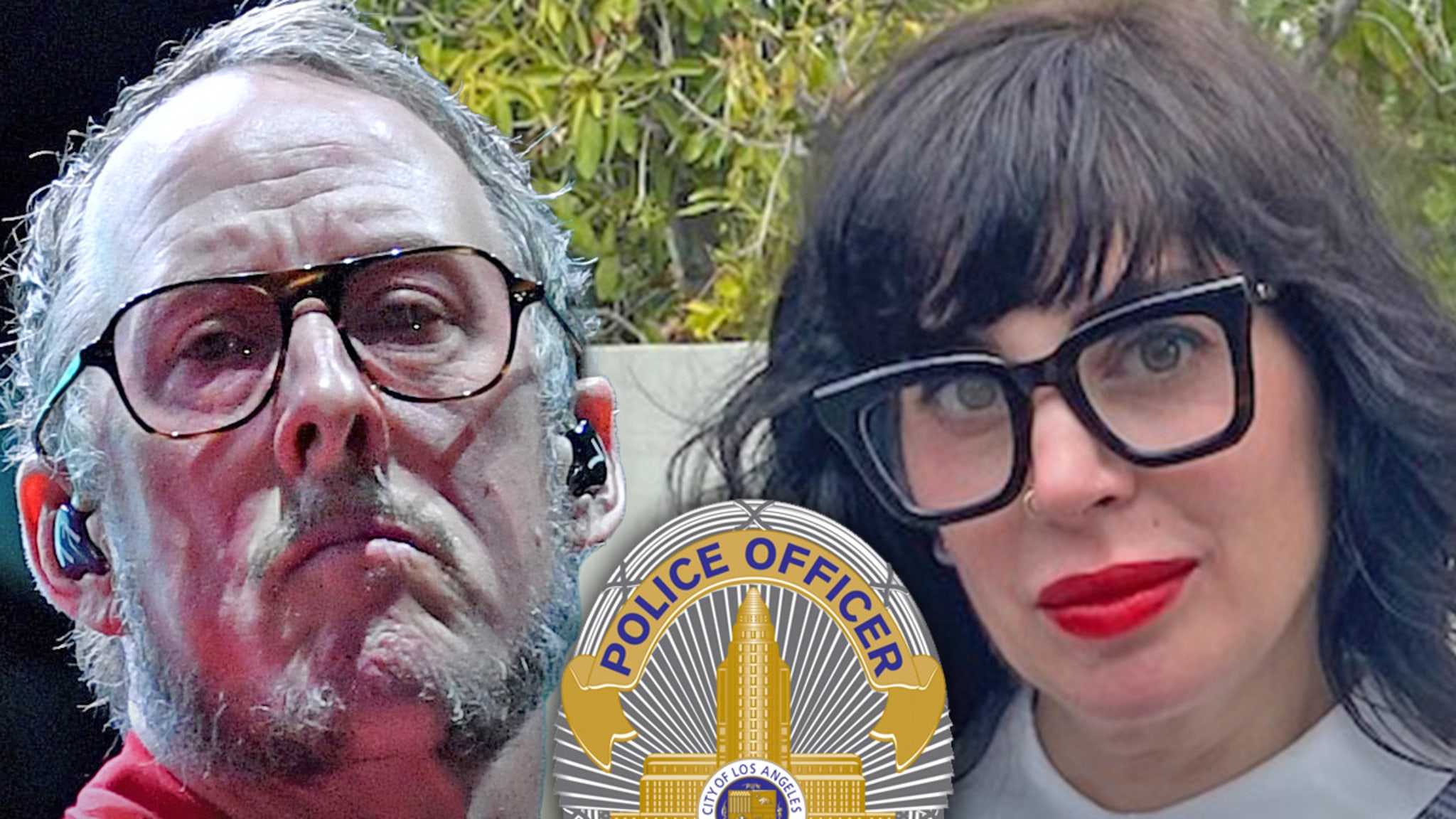
Weezer Member's Wife Shot By Cops in Shootout, Booked for Attempted Murder
The wife of Weezer bassist Scott Shriner was shot by cops during a wild chase in L.A. ... TMZ has learned, and then she was booked for attempted murder.www.tmz.com
Didn't we discuss what happens to those girls who go to the middle east to sell themselves?

 www.latimes.com
Bestselling author Jillian Lauren will avoid jail time for her actions in an incident where she shot at Los Angeles police officers who raced into the backyard of her home while chasing suspects.
A judge granted Lauren, 52, diversion on Thursday due to mental health issues, Los Angeles County authorities said.
Lauren — who is married to Weezer bassist Scott Shriner — was arrested in April after she found herself on the wrong end of a high-speed police chase that had nothing to do with her. LAPD officers were aiding the California Highway Patrol in a search for someone who fled the scene of a hit-and-run accident on the 134 Freeway and wound up in the backyard of Lauren’s Eagle Rock home.
Lauren was not connected to the hit-and-run incident, authorities said. But officers arrived and found her standing in her backyard armed with a handgun. Police said she ignored commands to drop the weapon and opened fire on the officers, who were not hit. Lauren was wounded when the officers returned fire.
On Thursday, L.A. County Superior Court Judge Susan J. DeWitt granted a petition to spare Lauren from serving jail time, determining she was eligible for mental health diversion. Under the terms of the agreement, Lauren must not own firearms, avoid the use of drugs and alcohol and attend therapy.
If she successfully complies with the agreement for two years, all charges will be dismissed, according to a spokeswoman for the Los Angeles County district attorney’s office. Prosecutors did not oppose the diversion petition, the spokeswoman said.
Calls and e-mails to Lauren’s attorneys were not returned. A spokeswoman for the LAPD could not immediately provide comment.
Lauren was initially arrested on suspicion of attempted murder of a peace officer, a charge that carries a lengthy prison sentence. Prosecutors eventually charged Lauren with assault and negligent discharge of a firearm.
It was not clear if Lauren heard police officers’ commands during the incident. A police helicopter was hovering over the scene. According to a video released by the LAPD, a neighbor could be heard telling a 911 dispatcher that Lauren was confused about what happened.
“There were three men, and one of them shot her, and the cops are looking for him right now … They have their guns out,” the neighbor said.
Lauren is the bestselling author of the memoirs “Everything You Ever Wanted” and “Some Girls: My Life in a Harem,” which recounts her encounters with Prince Jefri Bolkiah of Brunei.
She also wrote “Behold the Monster: Facing America’s Most Prolific Serial Killer,” a look inside the mind of serial killer Samuel Little. Lauren and Shriner have been married for 20 years.

I'd say Democrats are always fine with gun crime, they practically encourage it, just to push harder on the political side for more gun control/bans.Oo we oo she looks just like buddy holly
Democrats are fine with gun crime if it’s democrats doing the shooting

 www.inquirer.com

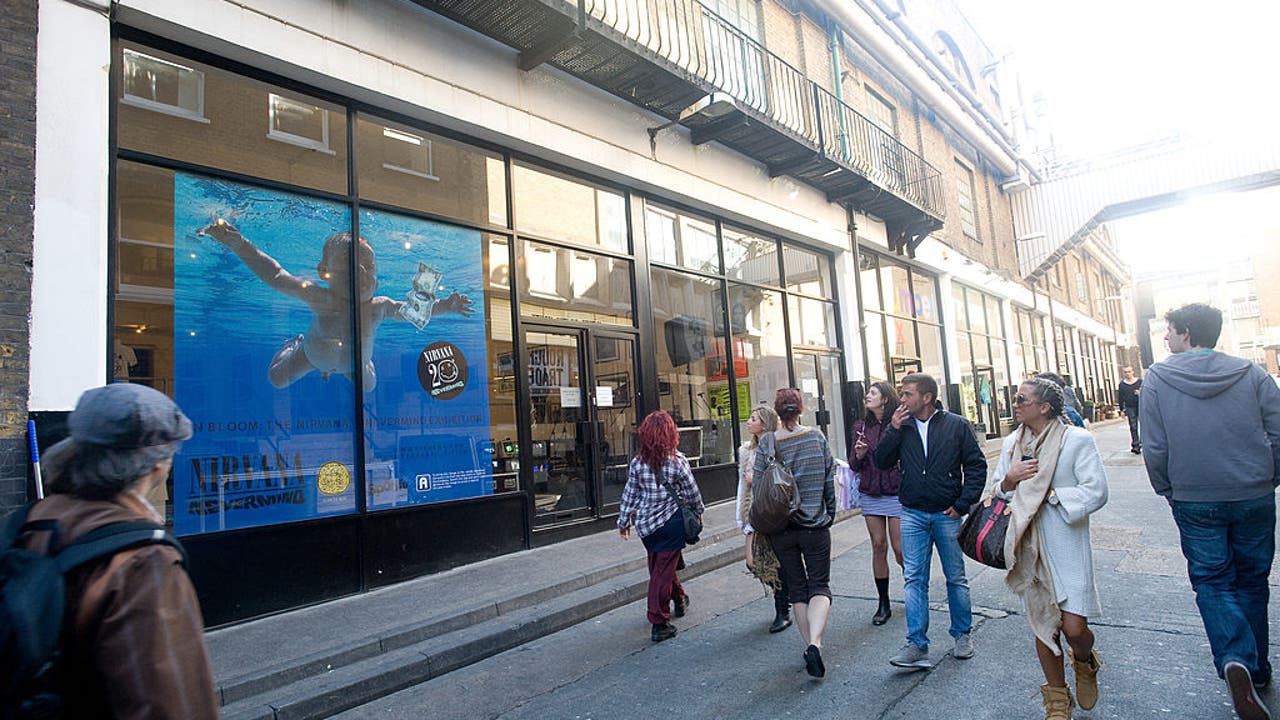
GoodNirvana wins in court: ‘Nevermind’ cover lawsuit thrown out
A lawsuit over alleged child sexual exploitation brought by a Los Angeles man pictured as a naked infant on the cover of the Nirvana album "Nevermind" has been dismissed.www.foxla.com

 t.co
t.co


